Browse Items (9 total)
Sort by:
Advertisements for stereographs

The stereograph sensation is evident in these advertisements on the last page of the April 29, 1865, issue of Frank Leslie’s Illustrated Newspaper. With the war now over, stereograph publishers began to focus on the medium’s use as…
Completely Silenced! Dead Confederate Artillery Men, As they lay around their battery after the Battle of Antietam.
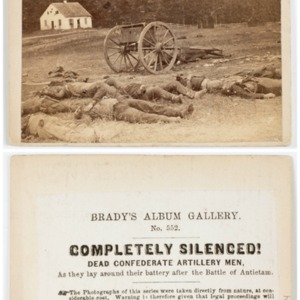
The affordability of the carte-de-visite form meant that it was used in a wide variety of ways, including to reproduce works of art and photography. During and after the Civil War, this included the work of the most famous photographers of the…
Civil War Stereographs
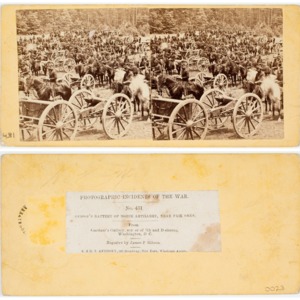
Stereography, an early form of three-dimensional photography, was a major vehicle for popular education and entertainment in the latter part of the nineteenth century. Otherwise known as the stereogram, stereopticon, or stereo view, the stereograph…
Ambrotype of unidentified soldier in Union uniform
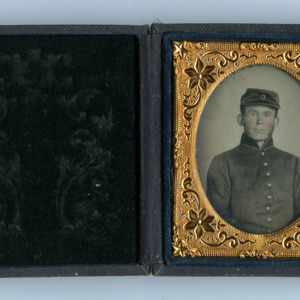
Among the photographic processes available to a widening public and used by Civil War soldiers were ambrotypes. Ambrotypes became popular in the mid-1850s, due in large part to their shorter exposure times (as compared to daguerreotypes), which also…
Regimental Album of the 24th Massachusetts
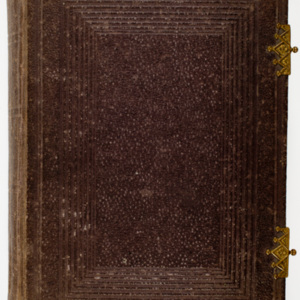
Although tintypes and ambrotypes were both used to capture images of soldiers, by far the most popular form soldier portraits took were cartes-de-visites. Unlike the former two processes, whose glass and metal foundations made them delicate, bulky,…
Marianne Washburn to Emory Washburn, July 29, 1841
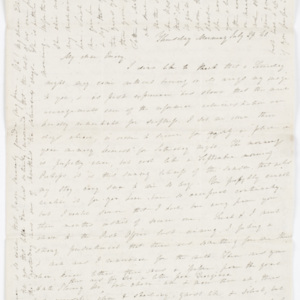
By the beginning of the Civil War, photography had been around for over twenty years, but in many ways it was still a new technology. Only recently had the new albumen process, in the form of cartes-de-visites and stereographs, made photography…
A Record of the War of Secession, Vol. I
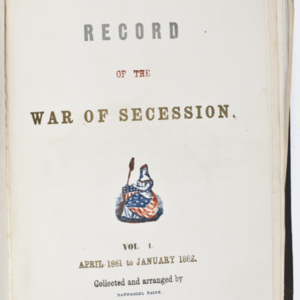
Nathaniel Paine (1832-1917) was a prominent Worcester banker and civic leader who counted among his friends and mentors Edward Everett Hale (1822-1909) and Senator George Frisbie Hoar (1826-1904). An avid lifelong collector, he was a member of the…
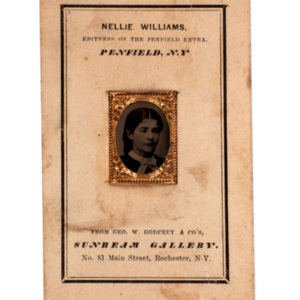
Penfield Extra: Little Nellie's Little Paper
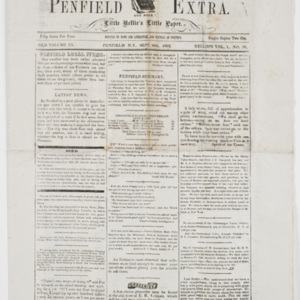
With the ubiquity and voracious appetite for news throughout the country, it is no surprise that the publication of amateur newspapers became a popular hobby in the nineteenth century. Though the first amateur newspaper in the United States is…