Browse Items (116 total)
Sort by:
Effects of the Fugitive-Slave-Law
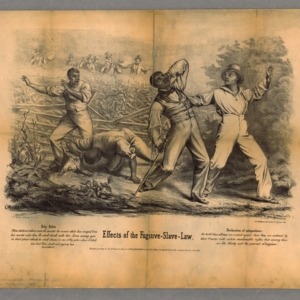
Just as the abolition movement harnessed the power of the printed word in newspapers, periodicals, tracts, and almanacs to spread its antislavery message, it also used printed visuals in the form of lithographs, engravings, and political cartoons. In…
The Anti-Slavery Alphabet
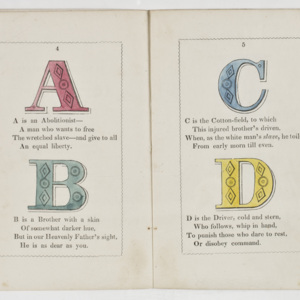
The Anti-Slavery Alphabet is a reader that was published in 1846 for the purpose of being sold at the Anti-Slavery Fair in Philadelphia. The fair was organized by the Philadelphia Female Anti-Slavery Society (PFASS) and raised money for abolitionism…
Attack On the Post Office, Charleston, S.C.
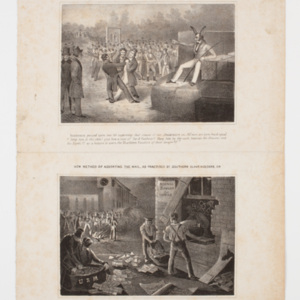
As veterans of the Bible and religious tract movements, the founders of the American Anti-Slavery Society (AASS) believed in the power of the printed word to convert sinners, including those whose sin was slaveholding. Immediately after its founding…
Letter from Samuel Salisbury to Stephen Salisbury, April 20, 1775
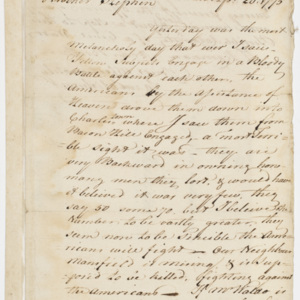
Samuel Salisbury (1739-1818) and his brother Stephen Salisbury (1746-1829) were in business together importing and selling merchandise from England and the West Indies. Samuel was located in Boston while Stephen came to the central Massachusetts…
The News Letter Book for 1737. Weakly News Letters & Journals.
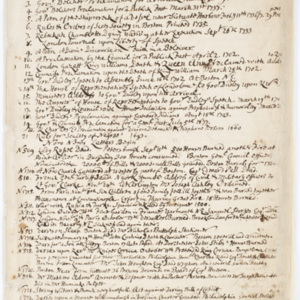
Almanacs, diaries, and newspapers shared a basic structure. Each organized events by the calendar: by day, by week, by month, by year. Each was a kind of annals or chronology, and in New England there was an underlying belief that chronology, whether…
Soldier's Letter
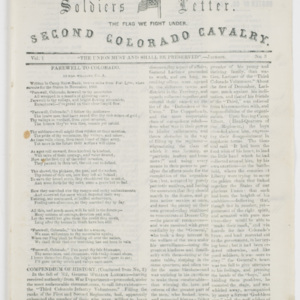
The Soldier’s Letter was a military camp newspaper published in Kansas City, Missouri, and Fort Riley, Kansas.It was issued by the Second Colorado Cavalry and edited by Private Oliver F. Wallace with contributions by other enlisted men and a few…
A Record of the War of Secession, Vol. I
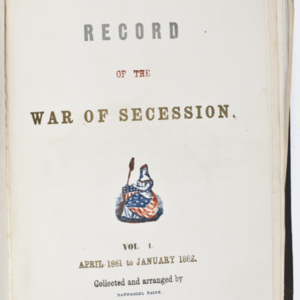
Nathaniel Paine (1832-1917) was a prominent Worcester banker and civic leader who counted among his friends and mentors Edward Everett Hale (1822-1909) and Senator George Frisbie Hoar (1826-1904). An avid lifelong collector, he was a member of the…
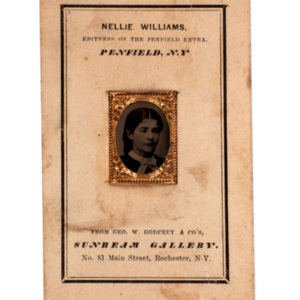
Letters of Daniel E. Burbank
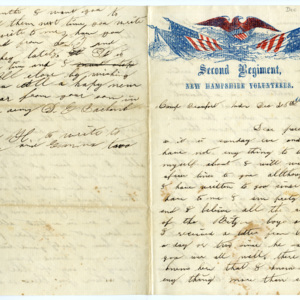
This set of letters was written by Daniel E. Burbank (1841-1920), a soldier from Fitzwilliam, New Hampshire.Burbank enlisted in the Second New Hampshire infantry, Company A, in the spring of 1861. His letters, mainly to his family, talk about camp…
Caroline Barrett White Diaries
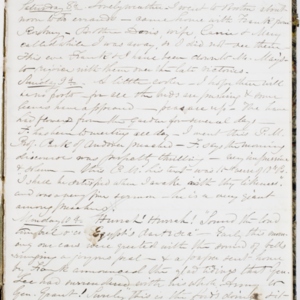
Diary and journal keeping was a common practice during the Victorian era and particularly during the Civil War, by both men and women, North and South. Unlike the generally terse and dispassionate diaries of the eighteenth century, nineteenth-century…