Browse Items (116 total)
Sort by:
Penfield Extra: Little Nellie's Little Paper
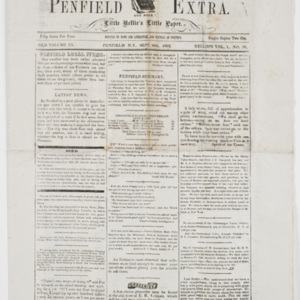
With the ubiquity and voracious appetite for news throughout the country, it is no surprise that the publication of amateur newspapers became a popular hobby in the nineteenth century. Though the first amateur newspaper in the United States is…
Caroline Barrett White Diaries
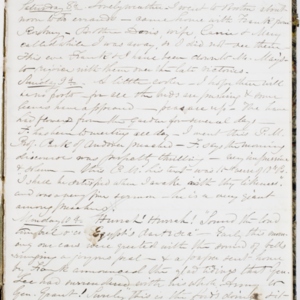
Diary and journal keeping was a common practice during the Victorian era and particularly during the Civil War, by both men and women, North and South. Unlike the generally terse and dispassionate diaries of the eighteenth century, nineteenth-century…
Anthony Burns
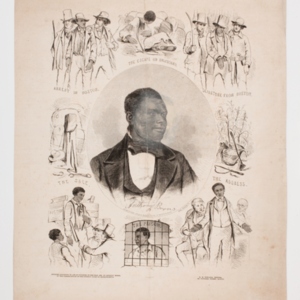
This large broadside, printed by R. M. Edwards of Boston in 1855, features woodcuts portraying scenes from the life of Anthony Burns (1834-62), a former fugitive and then freed slave whose story sparked fierce abolitionist reaction throughout…
Marianne Washburn to Emory Washburn, July 29, 1841
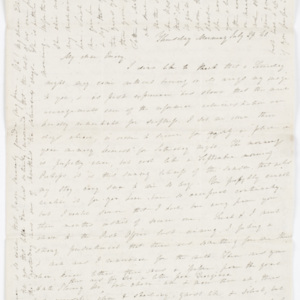
By the beginning of the Civil War, photography had been around for over twenty years, but in many ways it was still a new technology. Only recently had the new albumen process, in the form of cartes-de-visites and stereographs, made photography…
Soldier's Letter
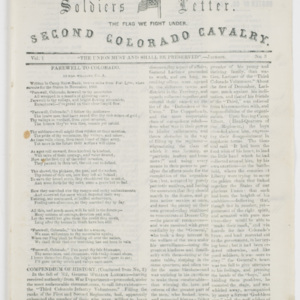
The Soldier’s Letter was a military camp newspaper published in Kansas City, Missouri, and Fort Riley, Kansas.It was issued by the Second Colorado Cavalry and edited by Private Oliver F. Wallace with contributions by other enlisted men and a few…
The Anti-Slavery Alphabet
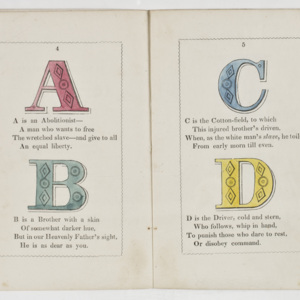
The Anti-Slavery Alphabet is a reader that was published in 1846 for the purpose of being sold at the Anti-Slavery Fair in Philadelphia. The fair was organized by the Philadelphia Female Anti-Slavery Society (PFASS) and raised money for abolitionism…
The Empty Sleeve
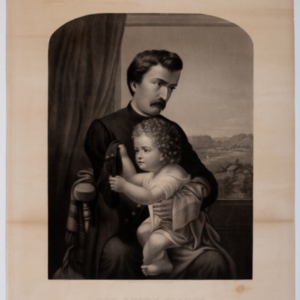
Not all news stories during the Civil War concerned battle outcomes, troop movements, and casualty lists. One ongoing news story—and one that became even more pressing as the war drew to a close—was the emotional and physical wreckage of returning…
Letter from Samuel Salisbury to Stephen Salisbury, April 20, 1775
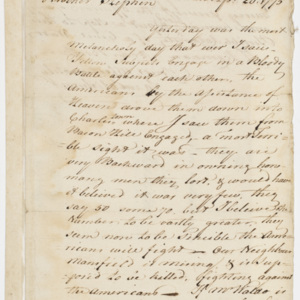
Samuel Salisbury (1739-1818) and his brother Stephen Salisbury (1746-1829) were in business together importing and selling merchandise from England and the West Indies. Samuel was located in Boston while Stephen came to the central Massachusetts…
The Bloody Massacre perpetrated in King - Street Boston on March 5th 1770 by a party of the 29th Regt.
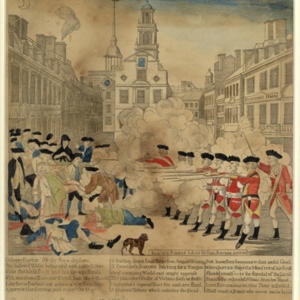
Paul Revere (1734-1818) was a silversmith and engraver born and raised in Boston. Though The Bloody Massacre, often referred to as “The Boston Massacre,” was not Paul Revere’s first foray into using engraving as commentary on news events and…
A View of Part of the Town of Boston in New-England and Brittish Ships of War: Landing Their Troops! 1768
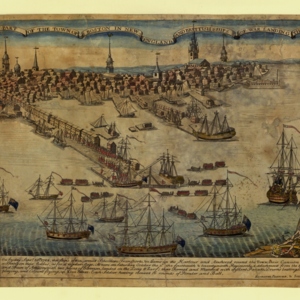
While newspapers decried in print the occupation of Boston by British troops beginning in 1768, Paul Revere (1734-1818), a silversmith and engraver in Boston, also did so visually. This engraving shows Boston Harbor facing the north part of town,…