Browse Items (116 total)
Sort by:
Flash

The proliferation of newspapers targeted at specific audiences did not stop with language, religion, or reform. Also included were “racy” or “sporting” newspapers, aimed at men, particularly young bachelors. Reaching their…
First printing of the Declaration of Independence in a newspaper
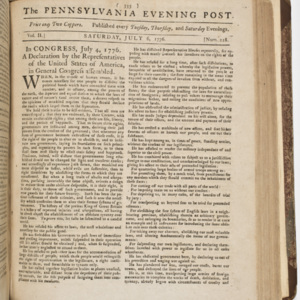
The Continental Congress charged five men with the responsibility to commit to paper the American colonies’ Declaration of Independence from Britain: Thomas Jefferson (1743-1826), Benjamin Franklin (1706-90), John Adams (1735-1826), Robert…
Fair copy of the Circumstantial Account sent to Gov. Trumbull of Connecticut
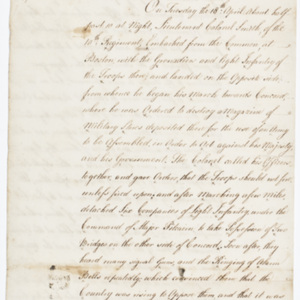
The royal governor of Massachusetts, General Thomas Gage (1719-87), responded to the flurry of news reports of the Battles of Lexington and Concord by sending official accounts of the confrontation to high officials in the adjoining colonies. He…
Extraordinary Events the Doings of God, and Marvellous in Pious Eyes

Thomas Prince (1687-1758), the senior minister of Old South Church in Boston from 1718 until his death in 1758, was a leading American proponent of the new natural sciences and the British Enlightenment. Yet he was a theological conservative who…
Effects of the Fugitive-Slave-Law
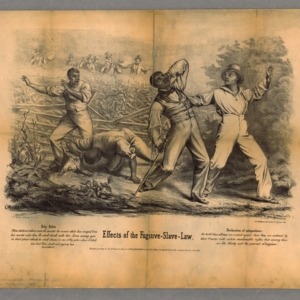
Just as the abolition movement harnessed the power of the printed word in newspapers, periodicals, tracts, and almanacs to spread its antislavery message, it also used printed visuals in the form of lithographs, engravings, and political cartoons. In…
Disturnell's New Map of the United States and Canada; Showing All the Canals, Rail Roads, Telegraph Lines and Principal Stage Routes

The rapid expansion of new modes of transportation and communication technology that increasingly connected the American states is evident in this 1856 Disturnell’s New Map of the United States and Canada. Drawn by Henry A. Burr, the topographer to…
Death of Col. Edward D. Baker, at the Battle of Balls Bluff
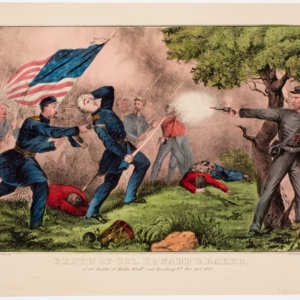
This hand-colored lithograph depicts the dramatic death of Colonel Edward D. Baker (1811-61), the only U.S. senator ever killed in battle. Like Abraham Lincoln, Baker began his political career in Illinois, and the two men developed a strong…
Confederate Scrap-Book
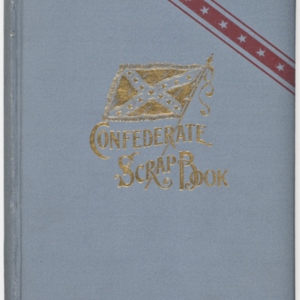
Scrapbooks were a common way for people in both the North and the South to process and keep a record of the war. Thus, they provide insights into what people were reading, what they were feeling, and what kinds of information they found important. A…
Concio Hyemalis. A Winter Sermon.
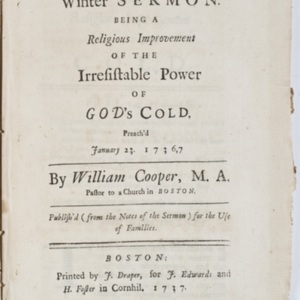
From 1716 until his death in 1743, William Cooper (1694-1743) was Benjamin Colman’s colleague in ministry at Boston’s Brattle Street Church. Like Colman and like Thomas Prince at Old South Church, Cooper frequently preached on current…
Completely Silenced! Dead Confederate Artillery Men, As they lay around their battery after the Battle of Antietam.
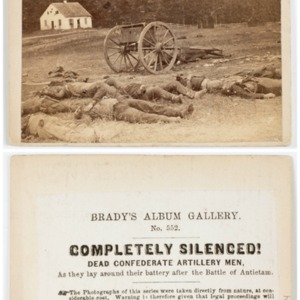
The affordability of the carte-de-visite form meant that it was used in a wide variety of ways, including to reproduce works of art and photography. During and after the Civil War, this included the work of the most famous photographers of the…