Browse Items (116 total)
Sort by:
By His Excellency William Shirley, Esq;...A Proclamation.

In colonial America the surest way for a printer to achieve financial stability was to secure government contracts for printing the laws and other official documents. Usually, the government printer also ran his newspaper as a kind of sycophantic…
By His Excellency Jonathan Belcher, Esq;...A Proclamation.

The most formal medium of news dissemination in colonial New England was the government proclamation, issued by the governor or other high official and printed elegantly in broadside form. Proclamations often announced special days of thanksgiving…
A Record of the War of Secession, Vol. I
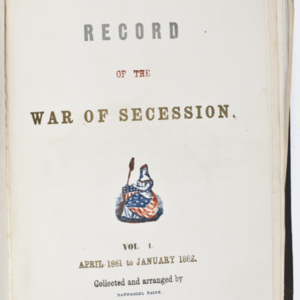
Nathaniel Paine (1832-1917) was a prominent Worcester banker and civic leader who counted among his friends and mentors Edward Everett Hale (1822-1909) and Senator George Frisbie Hoar (1826-1904). An avid lifelong collector, he was a member of the…
Bird's Eye View of the Seat of War
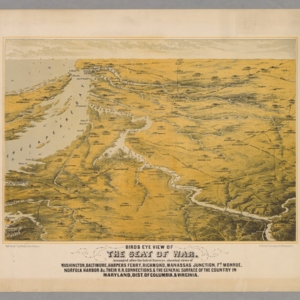
Among the visual ways in which people tried to make sense of the Civil War were maps. Maps helped people visualize the places where their loved ones were fighting, places most of them had never seen. Though few newspapers outside of the illustrated…
Thomas Prince Diary
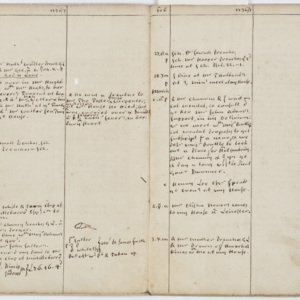
Thomas Prince (1687-1758), born in Sandwich, Massachusetts, was a leading public figure in Boston as senior minister of Old South Church from 1718 until his death. During that forty-year career, Prince was an avid news consumer as well as an…
Extraordinary Events the Doings of God, and Marvellous in Pious Eyes

Thomas Prince (1687-1758), the senior minister of Old South Church in Boston from 1718 until his death in 1758, was a leading American proponent of the new natural sciences and the British Enlightenment. Yet he was a theological conservative who…
A View of Part of the Town of Boston in New-England and Brittish Ships of War: Landing Their Troops! 1768
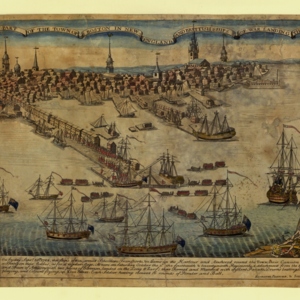
While newspapers decried in print the occupation of Boston by British troops beginning in 1768, Paul Revere (1734-1818), a silversmith and engraver in Boston, also did so visually. This engraving shows Boston Harbor facing the north part of town,…
The Bloody Massacre perpetrated in King - Street Boston on March 5th 1770 by a party of the 29th Regt.
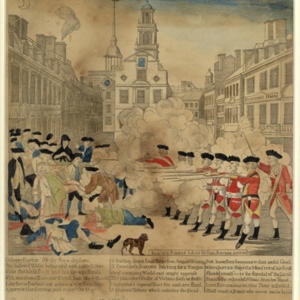
Paul Revere (1734-1818) was a silversmith and engraver born and raised in Boston. Though The Bloody Massacre, often referred to as “The Boston Massacre,” was not Paul Revere’s first foray into using engraving as commentary on news events and…
Letter from Samuel Salisbury to Stephen Salisbury, April 20, 1775
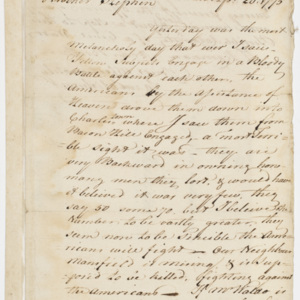
Samuel Salisbury (1739-1818) and his brother Stephen Salisbury (1746-1829) were in business together importing and selling merchandise from England and the West Indies. Samuel was located in Boston while Stephen came to the central Massachusetts…
The Empty Sleeve
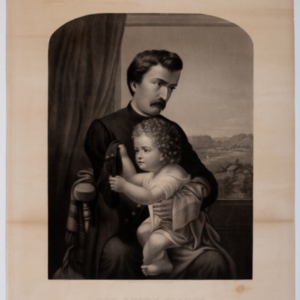
Not all news stories during the Civil War concerned battle outcomes, troop movements, and casualty lists. One ongoing news story—and one that became even more pressing as the war drew to a close—was the emotional and physical wreckage of returning…