Civil War Envelopes
Files
Description
The cheapness of new printing techniques and technology meant that now not only could most households afford to decorate their homes with individual prints, but also that all kinds of ephemera—those items meant to be used and thrown away—could be decorated as well. During the Civil War, printed envelopes were one such type of ephemera. They became popular early in the war, particularly in the Union. Hundreds of different images were used during the war to put a personal and political stamp on the stationery that was carrying news to and from the front. Often the imagery on the envelopes featured patriotic poems and symbols, such as Lady Liberty and eagles. At other times they carried political cartoons and the likenesses of war generals and heroes. Still others were part of regimental stationery sets, which were emblazoned with a specific regiment’s name. Often they were left black and white, but many were lithographically colored—and some even hand-colored—as well.
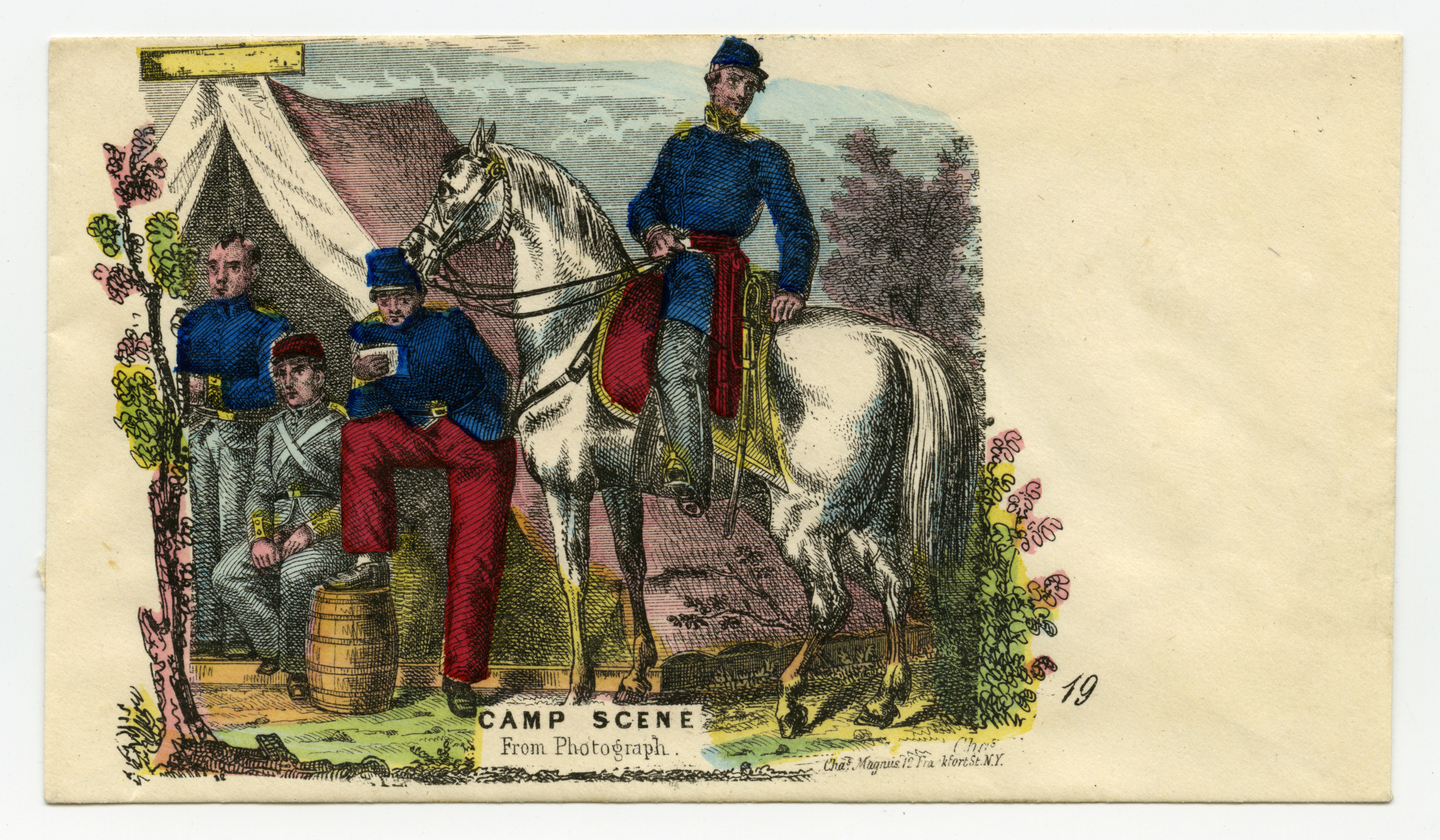
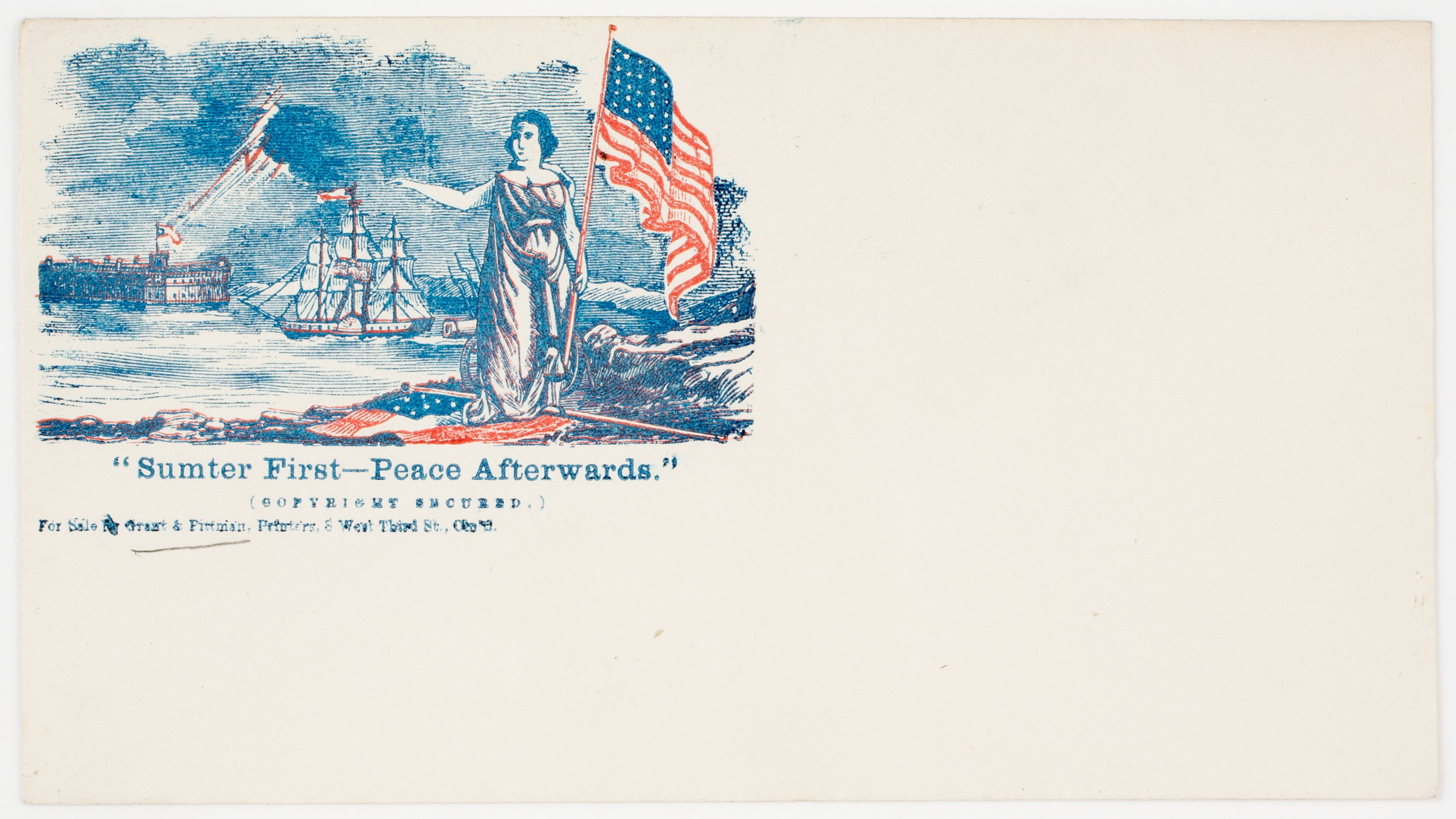
Occasionally, the envelopes carried more news-related images, such as the ones seen here. The first, “Camp Scene From Photograph,” provides a sense of having firsthand knowledge of the front lines. Not only does it depict a camp, but it allegedly does so from a photograph, perceived to be the most immediate form of image capturing. The vibrant hand-coloring also adds a dimension of lifelike authenticity. The second envelope melds both news and patriotic symbolism, featuring Fort Sumter weathering a storm and a strong Lady Liberty holding a Union flag while standing on the Confederate flag. The quote, “Sumter First—Peace Afterwards,” implies that regaining and revenging the attack on Sumter takes precedence over attaining peace. In this case the lithographically printed coloring enhances the patriotic effect, utilizing only red, white, and blue.
The latest news, particularly victories or the death of war heroes, often spurred new envelope designs, fueling both the printers’ trade and morale. What initially began as simple patriotic stationery soon turned into collector’s items. Printers began issuing the elaborate envelopes in boxed sets (notice the number “19” on the bottom right of the “Camp Scene” envelope), and albums designed to hold the envelopes also appeared on the market. As the war dragged on and resources—including paper—became short, such illustrated stationery came to be seen as indulgent and expensive and its production was abandoned before the end of the war.
The majority of the illustrated Civil War envelopes at the American Antiquarian Society has been fully cataloged online
Title
Alternative Title
Type
Date
Publisher
Coverage
Format
Source
click advanced search, and do a keyword search for "Civil War Envelopes"