Browse Items (116 total)
Sort by:
The LAD who carries The Massachusetts Spy, Wishes all his kind Customers A Merry Christmas, and a Happy New Year!

In colonial America, newspapers were delivered to their readers in a variety of ways. In the cities, customers often picked up their papers at the printing office. In the countryside, post riders delivered newspapers. Having free access to the postal…
The Halifax Gazette, or The Weekly Advertiser
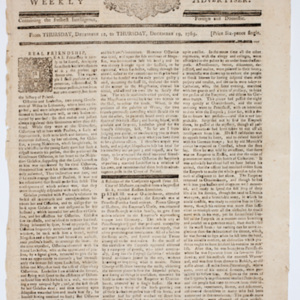
Isaiah Thomas (1749-1831) would become a prominent Patriot printer during the American Revolution and eventually one of the wealthiest men in the United States, but at sixteen he illegally left his apprenticeship in Boston with a poor printer named…
The Empty Sleeve
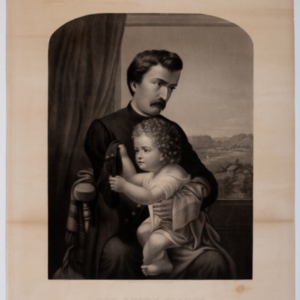
Not all news stories during the Civil War concerned battle outcomes, troop movements, and casualty lists. One ongoing news story—and one that became even more pressing as the war drew to a close—was the emotional and physical wreckage of returning…
The Daily Dispatch
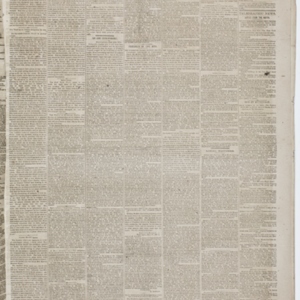
Getting news by telegraph and railroad was much more difficult for Southern newspapers than Northern papers. This was true in general, but even more so when General Lee’s Army of Northern Virginia crossed the Potomac into Northern territory.…
The Daily Citizen
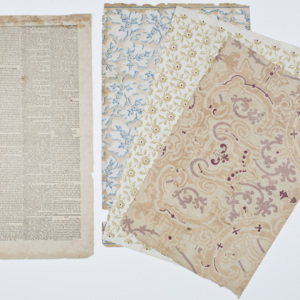
Among the shortages faced in the South as the war progressed was paper. To combat the problem, Southerners began to repurpose paper in any form they could, including wallpaper. Though in most instances wallpaper repurposing was for home use, in rare…
The Boston Weekly News-Letter
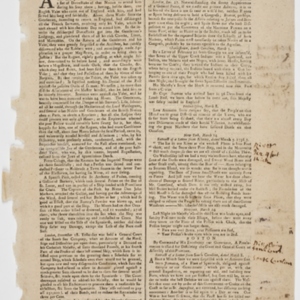
The oldest of the five newspapers in Boston in 1737 was the Boston Weekly News-Letter. Founded in 1704, it was also the oldest newspaper in America. The proprietor of the News-Letter after 1732 was John Draper (d. 1762), who, like most newspaper…
The Boston News-Letter

The Boston News-Letter was the first newspaper in America to survive beyond its first issue. Indeed, it survived for seventy-two years as a fixture of the Boston publishing scene. The founding editor and publisher was John Campbell (1653-1728), who…
The Bloody Massacre perpetrated in King - Street Boston on March 5th 1770 by a party of the 29th Regt.
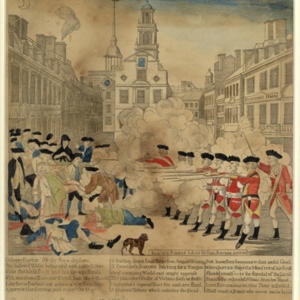
Paul Revere (1734-1818) was a silversmith and engraver born and raised in Boston. Though The Bloody Massacre, often referred to as “The Boston Massacre,” was not Paul Revere’s first foray into using engraving as commentary on news events and…
The Anti-Slavery Alphabet
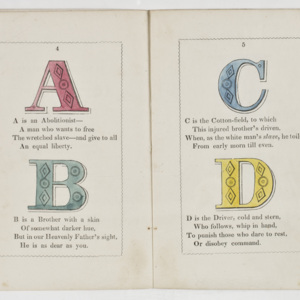
The Anti-Slavery Alphabet is a reader that was published in 1846 for the purpose of being sold at the Anti-Slavery Fair in Philadelphia. The fair was organized by the Philadelphia Female Anti-Slavery Society (PFASS) and raised money for abolitionism…
The American Weekly Mercury

The first newspaper to appear in America outside Boston was the American Weekly Mercury, launched by Andrew Bradford (1686-1742) in Philadelphia in 1719. His father, William Bradford (1663-1752), had opened the first print shop in the new city of…