Browse Items (116 total)
Sort by:
"Williamsburg, July 7. At a respectable meeting of the Freeholders and Freemen of the county of Richmond…"
This issue of the Virginia Gazette includes a summary of a meeting held to discuss resolutions with the representatives from Richmond County who would be attending the First Virginia Convention on August 1, 1774. (There would eventually be five…
"Williamsburg, July 27. Thursday the 25th instant the Declaration of Independence of the United Colonies was proclaimed here…"
Public readings of the newly minted Declaration of Independence took place in taverns, churches, town greens, or anywhere else people could gather. This July 27, 1776, issue of the Virginia Gazette records a public reading of the Declaration that…
"To the Inhabitants of the Province of Massachusetts Bay."
Daniel Leonard (1740-1829) was a lawyer and devoted loyalist. He lived in Taunton, Massachusetts, and was a member of one of the leading and wealthiest families in the commonwealth. In 1774, he was forced to flee his home by his Whig neighbors. He…
"To the Inhabitants of the Colony of Massachusetts-Bay."
In 1774 and 1775, lawyer and devoted loyalist Daniel Leonard (1740-1829) wrote a series of seventeen articles, published in the Boston Tory newspaper Massachusetts Gazette; and the Boston Post-Boy and Advertiser, under the pseudonym…
"The Colporter."
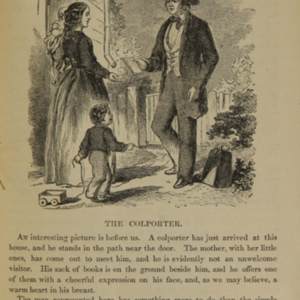
This illustration depicts an American Tract Society (ATS) colporteur at work. The term “colporteur” was coined in eighteenth-century France as a name for itinerant peddlers of books, especially religious books. In America, the term came…
"Santa Claus in Camp"

Harper’s Weekly became such a mainstay of popular news culture during the Civil War, that the newspaper could make references to its own popularity within its illustrations. Copies of Harper’s are among the presents Santa Claus is…
"PHILADELPHIA, April 27, 1775. Extracts of Letters from BOSTON, per post."
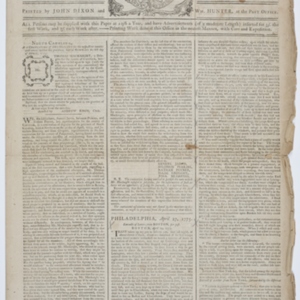
This May 6, 1775, issue of John Dixon (d. 1791) and William Hunter’s Virginia Gazette illustrates how news of Lexington and Concord spread throughout the colonies.On the first page in the middle column are extracts of letters from Boston about…
"News by Telegraph. Finance at New Orleans."

Aside from advances in printing technology and the development of the steam railroad, the telegraph was the biggest technological influence on news media in antebellum America. From 1844, when the first message was sent by Samuel F. B. Morse…
"Negroes As Soldiers"

Though much of the imagery surrounding African Americans was full of stereotypes and caricatures throughout the war, even in the North, positive depictions of African Americans began to appear more often as the war progressed. Though some unofficial…
"Messieurs Printers…At a meeting of the inhabitants of the town of Worcester…"
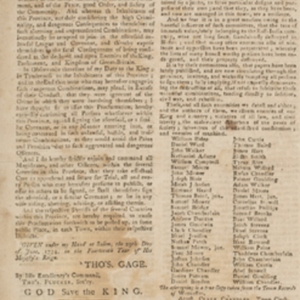
So-called “rebels” or “patriots” were not the only ones to use print media to their advantage during the pre-Revolution crisis. In the spring of 1774, loyalists in the shire town of Worcester, Massachusetts, felt that they…