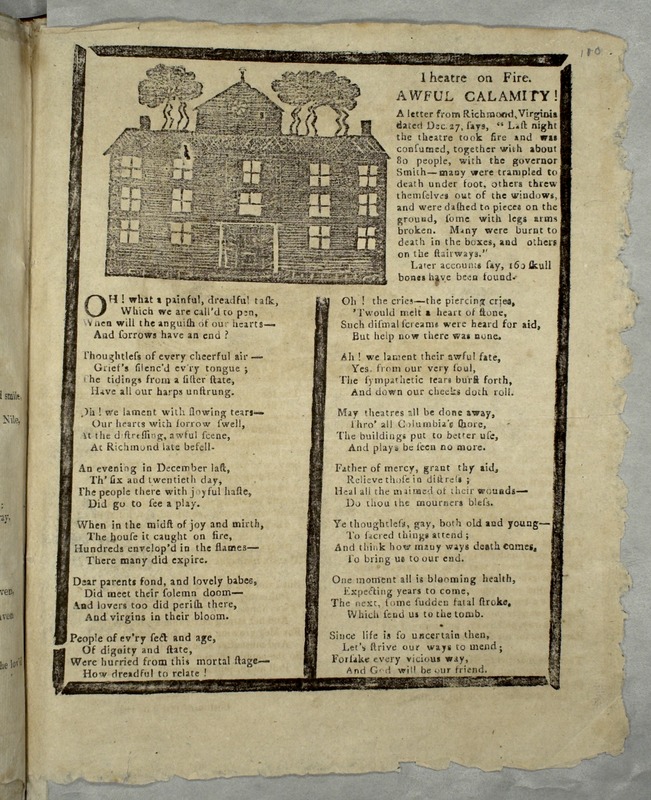
This sensational anti-theater broadside seems crude and hasty when compared to the delicacy of the cut and the sophistication of the typesetting in A Particular Account of the Late Distressing Fire at Portsmouth, reporting on the fire in Portsmouth two years later. Coverly may have been working up his pamphlet, Distressing Calamity. A Brief Account of the Late Fire at Richmond, Virg., and asked Joseph White to quickly put together a broadside to take advantage of the street market. It appears that two different engravers produced cuts, one for each publication, both probably working from the same image.
The cuts on both publications show the single narrow front door and portico and many windows. This architecture is confirmed by a lithograph published by B. Tanner in Philadelphia titled “The Burning of the Theatre in Richmond, Virginia, on the Night of the 26th of December 1811” (1812). This fenestration was planned to furnish cooling drafts in Richmond’s warm weather but it created a furnace in the fire. When the same management remodeled a theater in Charleston the following year, they provided thirteen doors opening directly onto the street, “to facilitate the escape of the audience in case of alarm” (Porter, With an Air 90).
The fire was commemorated on the front page of the Boston Independent Chronicle by two additional monodies and several columns of personal descriptions of the victims (February 10, 1812). In his History of the American Theatre, William Dunlap describes the Richmond fire.
The house was fuller than on any night of the season. The play was over, and the first act of the pantomime had passed. . . . All was yet gayety, . . . when the audience perceived some confusion on the stage, and presently a shower of sparks falling from above. . . . In a moment all was appalling horror and distress. (371)
The elegy here is in ballad meter, as are so many others of this nature. This meter, 8.6.8.6, fits the classic folk tune of "Chevy Chase." It is probably by a Congregational clergyman, who thundered against the theater and warned the people to “forsake every vicious way.” Boston had long banned the theater as immoral and dangerous to the populace. It was only in 1793, when enough prominent citizens claimed that their rights as free Americans were being restricted by not having a theater, that the council finally relented and repealed the anti-theater law. The calamity in Richmond was the subject of a number of sermons and pamphlets in the months that followed the arrival of the news of the fire.